
Presence in High-Pressure Conversations
Create calm, clarity, and credibility when it matters most
How to lead difficult, high-stakes conversations with presence and intention.
Presence in High-Pressure Conversations is a practical training designed for leaders and professionals who regularly operate in situations where stakes are high, emotions are present, and consequences matter.
Rather than avoiding pressure, the programme shows how to work with it — recognising what triggers pressure, how it shapes behaviour, and how to stay grounded, equal, and effective in the moment.
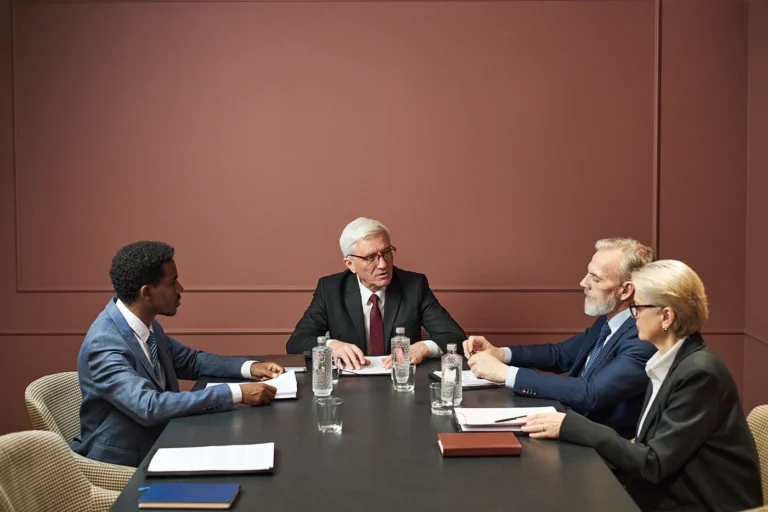

What changes after the programme
Participants learn how to:
- Recognise what creates pressure for them in conversation
- Identify the behavioural patterns they default to under stress
- Maintain executive presence and equal status in high-stakes situations
- Use framing and narrative to create clarity and direction
- Build psychological safety without losing authority
- Diffuse pressure for others — and be remembered for it
Pressure becomes a resource for leadership, not a threat to performance.
How the programme works
The programme integrates three tightly connected elements:
01 Presence, pressure & status
Participants explore how pressure shows up in the body, voice, and behaviour — and how unconscious status shifts can escalate tension.
They learn how to:
- recognise when they are dropping or inflating status
- level the playing field through behaviour and presence
- stay equal with people above, below, or across them
Executive presence is treated as a behavioural skill, not a personality trait.
02 Emotional awareness & psychological safety
High-pressure conversations often involve feedback, challenge, or potential loss.
Participants learn how to:
- read emotional signals in themselves and others
- understand what creates psychological safety for different people
- adapt approach without compromising clarity or standards
This allows difficult truths to be spoken without triggering defensiveness.
03 Framing, narrative & conversational leadership
Storytelling and framing are used to:
- slow conversations down when pressure rises
- set context before content
- guide attention toward what matters next
Participants practise leading conversations through structure rather than reaction, even when emotions are present.
Where this shows up
The approach supports:
Difficult feedback conversations
Influencing upward under pressure
Managing conflict or resistance
High-stakes stakeholder discussions
Conversations involving risk, performance, or change
These are the moments where leadership is most visible.
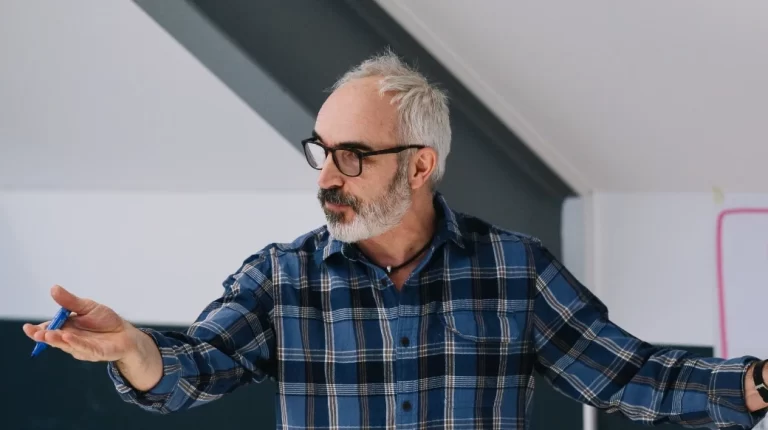
Programme format
Flexible depending on need:
in person
Short, focused modules within leadership programmes
Leadership Programmes
Modular delivery within leadership programmes
Integrated
Integrated role-play and scenario work